
By Cassie Wilson and 1000 Friends staff | 27-minute read; about 1 minute per bill
Read our 2026 legislative recap here
Last updated Monday, March 9, 12:00 pm. This page is no longer being updated.
The 2026 session of the Oregon Legislature started Monday, February 2 and concluded Friday, March 6. We tracked bills related to farmland use, urban growth boundaries, accessible housing, housing production, and more. We were particularly keeping an eye on some worrying bills that had/have the potential to open up exclusive farm use land to commercial activity and supersite industrial uses on some of the state’s best farmland.
Despite ongoing construction, much of the Capitol building—including the rotunda and cafeteria—is open and able to hold a larger capacity than in the past few years. You will be able to testify remotely or in person for all committee hearings. Every committee webpage has instructions on how to do that, as well as how to submit written testimony. We will also provide this information in all legislative alerts we send throughout the session.
Subscribe to our emails for alerts and regular updates
Here are the key bills we engaged with this session, divided into key advocacy areas:
Housing production
Natural and working lands
State budget
Transportation
Wildfire preparedness and resiliency
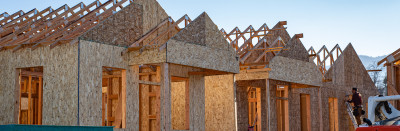
Housing production
Ensuring that all communities provide the opportunity for housing that meets the needs of all Oregonians in every neighborhood is a cornerstone of Oregon’s land use Goal 10 and our work. That means making sure that our state laws and local land use plans provide diverse, affordable, and accessible housing, well-located near schools, stores, parks, and services.
Housing bills that passed
SB 1576: Accessible housing
SUPPORT
Watch our video on accessible housing here
What it does: This bill establishes important first steps to meet the needs of many Oregonians for accessible housing. It will:
- Require 10% of new housing built with state funds meet Uniform Federal Accessibility Standards.
- Define accessible housing to include not just the Fair Housing Act accessibility standards, but also the Uniform Federal Accessibility Standards.
Why it matters: Currently, only approximately 0.3% of Oregon’s housing stock is fully accessible for wheelchair users, while approximately 1 in 10 Oregonians has difficulty walking. That means there is just one accessible unit for every 66 people who have difficulty walking.
The state’s current building code requires accessibility features in only 2 percent of units in buildings with over 20 units. That means we are failing—by a significant margin—to meet the housing needs of Oregonians with disabilities. No city in Oregon has even close to a sufficient amount of housing to meet the needs of its current and future residents with disabilities.
While people of all ages and all sorts of families need accessible housing, we also are an aging population, meaning the need for accessible housing is projected to significantly increase. Many older people are on fixed incomes as well. We need to start building units that are both accessible and affordable now, not just for today but also for the future.
Status: Passed both chambers, now onto the Governor for signing.
Testimony: View our written testimony.
SB 1567: Revolving loan fund for mixed-income residential projects
SUPPORT
What it does: Provides a new and needed funding source for mixed-income housing developments—a tool new to Oregon but proven in other jurisdictions. The bill establishes a Mixed Income Development Loan Fund in the Housing and Community Services Department, funded with $20 million, to spur public-private partnerships to develop housing that integrates affordable, work-force, and market-rate units. It provides long-term affordability for the affordable units. The fund will be self-sustaining, with the loans being paid and then reinvested into new projects.
Why it matters: In other states where this type of revolving loan fund for mixed-income projects is used, it has been successful both in building new projects and bringing private projects to the finish line with public dollars, in exchange for including affordable units. It provides a powerful new financial tool for building both market-rate housing and affordable housing.
Status: Passed both chambers; now onto the Governor for signing.
Testimony: View our written testimony.
HB 4082: One-time UGB expansion for senior housing or manufactured home parks
NEUTRAL
What it does: Allows qualifying cities to use the one-time UGB expansion provided for in SB 1537 (2024) for housing for seniors of moderate and lower incomes or for manufactured home parks.
Why it matters: While housing for senior Oregonians with moderate and lower incomes and manufactured home park housing opportunities are definitely needed, we would rather see these protected and encouraged inside existing UGBs, closer to the things we need every day, like stores, schools, and transit, and as part of UGB expansions already allowed by SB 1537.
Status: Passed both chambers; now onto the Governor for signing.
Testimony: View our written testimony.
HB 4036: Affordable housing preservation
SUPPORT
What it does: Establishes the bond-financed Preserve Affordable Homes for Oregon Fund, directs the Housing and Community Services Department to use this fund for affordable housing preservation.
Why it matters: Over 10,000 existing affordable homes are at risk of being lost in the next five years—due to expiring affordability restrictions, the need for significant repairs and upgrades, foreclosure threat, the sale of currently-affordable manufactured housing parks, and more. This fund will protect tenants from losing their homes, preserve the existing affordable homes our state has built, and lessen the likelihood of people becoming homeless.
Status: Passed both chambers; onto the Governor for signing. The funding for the program in HB 4036 is in SB 5702, which passed both chambers, including $25 million for housing preservation. Both bills are on their way to the Governor for signing.
Testimony: View our written testimony in favor of HB 4036 and SB 5702.
HB 4108A: Annexation in UGBs
SUPPORT
What it does: As amended, the bill allows Eugene to annex non-contiguous, residentially-zoned land that is inside its urban growth boundary (UGB), at the property owner’s request, when that land is already served by city infrastructure.
Why it matters: This removes an outdated annexation barrier that limits housing production and redevelopment opportunities on land that already functions as part of the city. Currently, many residential parcels, already inside a UGB, are prevented from joining a city—even though they are already connected to city sewer, water, electricity, and streets, and well suited for housing development. As a result, housing opportunities are unnecessarily delayed or foreclosed until neighboring properties annex, which may never occur. This is a pilot project for Eugene, and if successful, the scope might be enlarged to other cities.
Status: Passed both chambers; onto the Governor for signing.
Testimony: View our written testimony.
HB 4128A: Buyers Before Billionaires Act
SUPPORT
What it does: Large institutional investors may not purchase, acquire, or offer to purchase a single-family residence unless the home has been listed for sale to the general public for at least 90 days.
Why it matters: Over the past decade, housing costs in Oregon have risen far faster than wages, making it increasingly difficult to rent or own a home. At the same time, competition from large institutional investors who are buying up homes has increased markedly in Oregon, squeezing first time home buyers out of the market altogether. In Portland, investor purchases rose by roughly 14 percent in 2025, the third highest increase in the country, signaling a clear and troubling investor interest in Oregon’s housing market. HB 4128A ensures that single-family homes are first made available to the general public, before large institutional investors remove them from the market.
Status: Passed both chambers, now onto the Governor for signing.
HB 4035A: Expands eligibility criteria so more cities may use one-time UGB expansion path provided in 2024
NEUTRAL
What it does: Allow more cities to use the UGB expansion shortcut provided by SB 1537 (2024) by, among other things, allowing expansion on to farm and forest lands in certain defined circumstances, while clarifying the acreage allowed under this option.
Why it matters: HB 4035A establishes a policy structure for allowing a greater number of cities to use the shortcut UGB expansion process established in SB 1537 (2024). It also continues to ensure long-term affordable housing and amenities for those living in the development.
Status: Passed both chambers, now onto the Governor for signing.
Housing bills that did NOT move forward
SB 1564: Woodburn UGB expansion
OPPOSE
What it does: The bill would have supersited an expansion of the Woodburn urban growth boundary (UGB) onto a specific 120+ acres of excellent farm land.
Why it matters: The bill would have overridden land use laws to supersite a UGB expansion for one development interest. Such one-off bills would set a poor precedent for the legislature. We need true solutions for Oregon's housing needs, not those driven by private development interests that continually want more land. Oregon does not have enough diverse housing, affordable to those of moderate and lower incomes, but allowing further urban sprawl onto farm and forest lands and natural resource areas is usually the most expensive way to build housing: It requires a new set of roads, sewer systems, water pipes, emergency services, and more. That’s why 1000 Friends has worked and continues to work on effective land use and investment tools to support building the housing Oregonians need where they need it.
Status: This bill did not move forward. However, HB 4035A, a better bill with a policy structure, will allow Woodburn to qualify for a one-time UGB expansion for housing and amenities, and will guarantee that a minimum of 30% of the housing is affordable.
Natural and working lands
Listen: "Keeping Oregon Oregon" Previews Legislation Affecting Farmlands
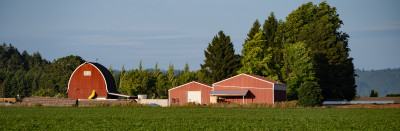
Oregon’s land use planning program protects our natural and working lands, which are essential for one of Oregon’s key economic pillars: Agriculture. Oregon farmers depend on land use protections to provide reliable, affordable access to farmland, and our state is home to some of the best soils in the world. Unfortunately, the land use program faces many threats to weaken it, including several bills proposed this session.
Natural and working lands bills that passed
HB 4153: Allows farm stores as a nonfarm use on EFU land
OPPOSE
What it does: Requires counties to allow 5,000- to 10,000-square-foot “farm stores,” offering shopping, dining, alcoholic beverage service and sales, and ongoing big events such as concerts and weddings in exclusive farm use (EFU) zones.
Why it matters: Most of the written testimony submitted in favor of HB 4153 was based on the apparent misunderstanding that farm stands are not currently allowed, or at risk of being shut down. Neither of these is correct. Farm stands, wineries, agritourism events, and other commercial and recreational activities are already allowed on EFU land. Farm stands are specifically allowed already and many of the beloved farm stands referenced in testimony are now operating under a farm stand permit.
HB 4153 was crafted by special interests behind closed doors. With little debate, it would impose a radical shift to our state’s legacy of protecting farmland for farm use.
The public is against this bill. Over 1,500 comments have been submitted online and 70% of them are in opposition. Many who signed up to testify did not get a chance because of limited time. A reasonable alternative was crafted by Friends of Family Farmers and other farmers left out of creating HB 4153, however, the legislative committee would not even take up the -6 amendment.
The bill allows large, permanent multi-use structures for nonfarm retail sales, food and beverage service, and unlimited events on agricultural land without safeguards to ensure that agriculture remains the primary use of the property.
Commercial destinations of this kind require significant upfront capital costs that could turn EFU zones into a pay-to-play system that undermines farmers and prioritizes commercial development. The bill fails to address impacts on land affordability and farm viability, two primary issues for small and beginning farmers.
Commercial entities could easily take advantage of lower tax assessments and buy up cheap farm land to develop into event venues and retail outlets, without ever intending to meaningfully farm the land in the first place. Purchasing 10 acres and a couple of cows does not contribute to a farm business or economy, but would count as “farm use” under state law and therefore qualify for a farm store.
State law currently allows wineries, farm stands, agritourism events, and other commercial and recreational activities in the exclusive farm use zone. The existing law requires agriculture to remain the predominant use of the land.
This bill also eliminates the “good neighbor” analysis currently required for agritourism permits to ensure events and nonfarm activities do not negatively impact other farms around them. HB 4153 would significantly weaken Oregon’s long-standing protections for EFU land.
Status: Passed both chambers; onto the Governor for signing.
Testimony: View our written testimony.
SB 1561: Replacement dwellings on farm and forest land
SUPPORT
What it does: Allows an alternate method for a property owner to demonstrate they had a house on rural lands, which was damaged or destroyed by natural or involuntary causes, and therefore is entitled to be replaced. Limits replacement dwellings that are justified under this alternate path to no more than 25% larger than the original house, which we support.
Why it matters: Oregon agricultural and forest land is being lost to luxury home developers who are misusing the limited authorization for “replacement dwellings” in Oregon’s exclusive farm and forest zones. This both takes land out of production and drives up the price of nearby agricultural and forest land. Oregon’s farmers, ranchers, and forest land managers—especially people who are just growing their businesses—are finding it increasingly difficult to locate land they can afford to lease or purchase.
This bill limits some of these replacement dwellings to no more than 25% larger than the original dwelling—that's an improvement on existing law that we support. In future legislative sessions, we will be advocating for that size limitation for all replacement dwellings, to stem the gentrification of our working lands.
Status: Passed both chambers, now onto the Governor for signing.
Natural and working lands bills that did NOT move forward
SB 1586: Hillsboro supersiting of industrial land
OPPOSED
PRESS RELEASE: SB 1586 DEFEATED
What it does: For the sixth time, legislators attempted to bring 1,700 acres of prime and high-value farmland into the Hillsboro urban growth boundary outside the established urban growth boundary expansion process and without any public involvement. The bill would have also extended property tax exemptions in Enterprise Zones.
Why it matters: The targeted land comprises some of the best agricultural land in the world. Nearly 90% of the subject area involves prime farmland under normal management, the remainder being high-value farmland. Hillsboro received over 1,000 acres of industrial land in 2014, which was an ample 50-year supply. But the city has been burning through this land quickly with data center development and other commercial, recreation, and retail land uses. Data centers create few, relatively low-paying jobs. Additionally, the bill would have extended tax breaks for these same corporations—companies that can easily afford to pay their fair share. The bill’s focus on Hillsboro ignored the needs of other Oregon communities and lands currently available around the state.
Status: This bill is not moving forward—thank you for your advocacy!
Testimony: View our written testimony | View our verbal testimony delivered by Executive Director Sam Diaz | View our joint letter with over 40 organizations opposing SB 1586.
SB 1578: Rural residential development on resource lands
OPPOSE
What it does: This bill would have overridden land use and environmental laws by allowing rural counties to rezone up to 50 acres of farm or forest lands for residential development, in one or several parcels, with a density of at least five houses per acres. It also would have allowed accessory dwelling units (ADUs) on farm and forest lands, with houses that are not related to farming or forestry and are nearly three times larger than what is currently allowed for rural ADUs.
Why it matters: The outcome of these two provisions will be a multitude of houses sprawling across Oregon's farm, ranch, and forest lands that are not related to farming or forestry. That drives up the price of the land, placing it out of reach to actual farmers, ranchers, and foresters, especially new and younger ones. These houses can also be sited without regard to wildlife, water availability, and more, setting up more conflicts.
Status: This bill did not move forward. 1000 Friends is interested in working on housing development inside rural communities in the 2027 session.
Testimony: View our testimony.
HB 4113: Metolius TDO
OPPOSE
What it does: This bill would have allowed a county to site up to 960 units of housing on up to 250 acres outside a UGB somewhere in the state, including on farm and forest land. This would exempt the developer from the Oregon land use system.
Why it matters: Allowing 250 acres of development on lands outside urban growth boundaries—land intentionally set aside to protect farms, forests, open space, and wildlife habitat—is not a win for the public or for conservation. It’s a benefit to a single private interest, and a threat to the integrity of Oregon’s rural lands and land use principles.
There are serious climate and wildfire safety issues related to creating a new development that could house over 2,000 people on rural lands outside of cities. There are also unresolved questions about city and county roles and obligations related to impacts to existing water, sewer and transportation infrastructure and providing new services, access and infrastructure.
When Oregon designated the Metolius River Basin as an Area of Critical State Concern, the legislature gave the private landowner who wanted to develop there a time-bound “transfer of development opportunity” to develop a resort on another parcel somewhere else in the state with, in essence, pre-approval from state agencies. Over the past 17 years, the developer has not exercised that development opportunity. They have gone back to the state legislature for not one, but five different timeline extensions, as well as two geographic expansions. And the clock has run out five times.
Status: This bill did not move forward.
SB 1522-1: Removes protection for farm and forest lands in designating urban reserves
OPPOSE
What it does: The current system by which cities may designate urban reserves provides that farm and forest lands are to be looked to last, if needed. The bill prohibits any considerations for avoiding resource lands.
Why it matters: HB 1522, when originally filed, was a meaningless "placeholder" bill. The current -1 amendment, only recently submitted, upends the longstanding UGB system.
Urban reserves are the lands cities have designated for where they will expand, if and when the city needs additional urban lands beyond its current 20-year UGB. Prohibiting cities from avoiding including farm and forest lands in urban reserves means those valuable resource lands will certainly be designated first—before rural residential lands and non-resource lands. Then when the UGB is expanded, a city would effectively expand first into farm and forest lands, contrary to decades of policy and law. This bill represents a major upheaval of the balance that currently exists between accommodating urban land needs and protecting the lands for Oregon's second-largest industry: agriculture.
Status: This bill did not move forward.
State budget
We supported the following budget asks in the 2026 session:
- 1.25% for wildlife: Passed
- Affordable housing preservation: Funded with $25 million
- Continued funding for FFA/4H: Protected
- Federal tax code disconnect: Passed
- Industrial land readiness funding: Passed
- Maintain Oregon Agricultural Heritage Program funding: Protected
- Reinstate funding for Japanese Beetle eradication: Passed
Testimony: View our written testimony from the budget hearing.
Maintain Oregon Agricultural Heritage Program (OAHP) funding
SUPPORT
What it does: The legislature created the Oregon Agricultural Heritage Program (OAHP) in 2017 but did not fund its operation until 2022. Since then, the program has provided millions of dollars (and attracted millions more in federal funding) for willing farm and ranch landowners to create easements that permanently protect their land and ensure it remains in production.
While the Oregon Agricultural Heritage Program (OAHP) received $2 million in the biennium, all agencies are being asked to provide a budget for cutting 2.5% or 5% of their general fund dollars. The agency that oversees OAHP, the Oregon Watershed Enhancement Board (OWEB) has very little general fund funding: only OAHP and part of a staff position. Necessarily, all of OWEB's proposed cuts came from OAHP.
The Coalition of Oregon Land Trusts (COLT) and Oregon Agricultural Trust (OAT) are working with partners to advocate for OAHP to keep all of its funding, especially because the applications for OAHP have already been submitted, the program is oversubscribed, and 5 of the 6 applications have already secured federal match that will go away if we do not secure state funding. See stats on the submitted applications below.
COLT and OAT have heard that it is possible for the Ways and Means Subcommittee on Natural Resources to allocate excess funding from agencies under purview to cover deficits in other agencies. We are advocating for the Full Committee on Ways and Means to protect as much of this grant funding as possible, while recognizing that there are difficult budgeting decisions to be made.
OWEB budget bill, as discussed, would provide continued funding.
Why it matters: OAHP is not a land use program; rather, it is another, complementary tool to help Oregon achieve the goal of preserving farm land by placing working lands easements on the land of willing property owners. The program also helps farmers with transition planning to pass their land on to the next generation of farmers.
Reinstate funding for Japanese beetle eradication
SUPPORT
What it does: Provides funding to re-establish program to eradicate Japanese beetles in Oregon. Would authorize an increase in nursery license fees to generate $750,000 and provide an additional $750,000 in state funding.
Why it matters: The Japanese beetle is a major threat to Oregon’s nursery and greenhouse industry. The insect targets numerous plants and can be eradicated from Oregon. Before "defunding" the Oregon Department of Agriculture was well on the way towards eradication. Other jurisdictions where Oregon nursery products are now marketed rely on assurances that Oregon will continue to fight the pest. Without continued control, Oregon faces loss of markets.
With an estimated value of $1.22 billion, this industry has been ranked as Oregon’s number 1 agricultural commodity in sales for 8 of the last 10 years. Nurseries are an important traded sector element of the state economy. Nearly three-fourths of sales come from out of state.
Transportation
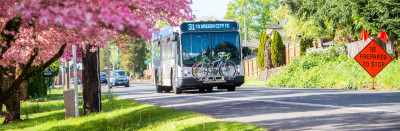
While there were some great transportation bills we’ve been involved with and are tracking, Oregon Department of Transportation’s (ODOT’s) budget gap continued to take up most of the conversation this session. After the Governor signed the 2025 special session transportation funding bill into law, opponents began gathering signatures to refer most of it (gas tax and DMV fee increases) to the ballot for repeal. By the end of 2025, it qualified to be on the November 2026 ballot. The state cannot collect or spend revenue associated with referred parts of the bill until the vote is resolved.
As a result, ODOT’s budget gap for the 2025–27 biennium is still unresolved. The Governor called on the legislature to redirect all transportation funding—except transit—to ODOT’s basic maintenance and operation needs. There is not a bill or proposal available from the legislature yet, but we will add it to this page when one is introduced. The legislature may also introduce legislation to move the ballot measure election to the May 2026 primary.
Transportation bills that did NOT pass
HB 4008: Transit funding task force
SUPPORT
What it does: Establishes a task force for the legislative interim to explore options to raise revenue for public transportation across Oregon.
Why it matters: There are many reasons we need to fund transit: Approximately 30% of Oregonians can’t or don’t drive, transportation accounts for the biggest source of Oregon’s greenhouse gas emissions, and increased transit access is necessary as part of meeting our increased housing production goals in our cities and towns.
Transit agencies across the state have been forced to cut service due to operational costs exceeding revenues. Rural transit districts have also experienced a loss in federal funding. The legislature failed to pass a comprehensive transportation funding package in 2025, leaving transit without the increased revenue it needs.
Status: This bill did not move forward.
SB 1543: Guardrails for good governance
SUPPORT
What it does: Establishes the first-ever debt management policy for the Oregon Department of Transportation. It requires more information and transparency—especially to the public and the Oregon Transportation Commission when ODOT is deciding to take on new debt, including: Opportunity costs, alternatives, risks, and tradeoffs. This would also update the membership of the OTC to be more geographically representative, including at least one member who primarily (or entirely) gets around without a car, and two non-voting members from the state legislature. Amendments are forthcoming.
Why it matters: ODOT’s debt is outpacing its revenue. The state brings in a lot of money for transportation, but it is mostly going towards repaying debt. Smaller bridge, maintenance, and preservation projects across the state are being defunded to cover the state’s ballooning transportation debt. This is a commonsense policy that other states have to prevent these problems from happening. Oregon’s legislature has never given ODOT direction on how to manage its debt, so this is long overdue.
Status: This bill did not move forward.
Testimony: View our written testimony.
SB 1542: Measure what we drive
SUPPORT
What it does: Provides legislative direction to ODOT to prioritize spending state transportation funds in ways that move us closer to the goals outlined in the Oregon Transportation Plan, such as having a well-maintained system and eliminating fatalities and serious injuries from traffic crashes. It does this by adopting best practices from other states that score projects and programs based on their measurable impacts, and adjust spending based on progress across all goals. It puts guardrails on megaprojects, and ensures more public reporting and accountability for where our transportation dollars are being spent and why. Amendments are forthcoming.
Why it matters: ODOT has never received legislative direction and flexibility to spend transportation dollars in a way that aligns with Oregon’s goals. Instead, it's been statutorily restricted in how it can spend money, which is why Oregon keeps spending money on new projects that were written into law while our existing infrastructure crumbles. This bill aligns with some of the work ODOT is already doing to plan better, using a 10-year capital investment plan (CIP) model, and crucially gives ODOT direction to spend in line with the priorities outlined in the CIP, which they would otherwise have to disregard under current law.
Status: This bill did not move forward.
Testimony: View our written testimony.
HB 4023: Increased barriers to local transit funding
OPPOSE
What it does: This bill would remove the ability for mass transit districts to raise revenue in their district without taking it to the ballot for a vote.
Why it matters: Increasing barriers to raising revenue for transit—especially at a time when many transit districts are already financially struggling to keep service going for riders—is a problem. This is especially true for the 30% of Oregonians who can’t or don’t drive, and often rely on transit to get to work, school, and errands.
Additionally, the timing of this bill seems to specifically be targeted at Cherriots (Salem Area Mass Transit District), which finally had a moratorium lifted on their ability to raise local funds. Other mass transit districts, like TriMet and Lane Transit District, have a local funding mechanism to raise revenue, in addition to other sources. For example, TriMet and LTD have an employer-side payroll tax in their district, which is different from the state’s employee-side payroll tax that funds all transit in Oregon.
Status: This bill did not move forward.
HB 4063: Legalizing Kei trucks
SUPPORT
What it does: Legalizes the use of Kei trucks, Japanese-made utility trucks, on Oregon roads by requiring that they be titled and registered with the state.
Why it matters: You may see them operated around college or hospital campuses or on agricultural lands, but Kei trucks cannot be operated legally on public roads. These vehicles are a much more affordable, practical option for people who may need to regularly haul things.
Kei trucks are also a much safer vehicle than many newer pickup trucks, which continue to increase in size and height—making it difficult for the operator to see pedestrians (especially children and wheelchair users), cyclists, animals, obstacles, and other things directly in front of the vehicle.
Status: This bill did not move forward.
HB 4085: Autonomous Vehicles
OPPOSE
What it does: Legalizes operation of fully autonomous vehicles (AVs) and AV networks statewide. Preempts cities from regulating autonomous vehicle networks.
Why it matters: This bill leaves many unanswered questions. While we understand the need for a state statutory framework for fully autonomous vehicles, local jurisdictions absolutely need flexibility to regulate AV networks. Oregon’s land use planning program is intentional, and local transportation system plans don’t currently factor in managing AVs. What are the impacts on sprawl? How do we manage zero passenger trips, when it’s already difficult to reduce single occupancy vehicle trips? How will this impact public transit ridership recovery, especially while service cuts continue to worsen? Will our main streets become congested with empty AVs waiting for riders?
To our knowledge, the current primary AV rideshare provider is Waymo, and in a follow up from their October informational hearing they shared that none of their vehicles are wheelchair accessible. This bill allows for that to continue to be the case by allowing AV networks to refer people out to other accessible ride providers. This is deeply concerning considering the lack of existing wheelchair accessible rideshare services. Uber and Lyft provide very few wheelchair accessible vehicles, and is an issue we are seeking to address. TriMet LIFT, which also provides door-to-door service, is not open to all disabled people, only people who cannot use fixed route transit.
Status: This bill did not move forward.
Testimony: View our written testimony.
Wildfire preparedness and resiliency
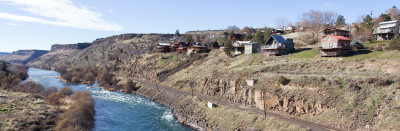
Over the past 20 years, wildfires in Oregon have increased in number, size, and intensity—destroying significant portions of Oregon homes, towns, and communities, and leading to loss of lives.
In response, the 2021 Oregon legislature passed and funded the state’s first comprehensive wildfire-preparedness bill, which established wildfire-preparedness and resiliency programs and investments across the state and made a measurable difference for Oregonians. This legislation included requiring the state to prepare a wildfire hazard map, to indicate where state funding, education, technical assistance, and regulations would do the most to make Oregonians and their homes and communities more wildfire safe.
However, a campaign of fear-mongering led to the repeal of that map, emphasizing even more that individual property owners, neighborhoods, and communities must take actions on their own to reduce losing homes and businesses to wildfire.
SB 1551: Fire Hardened Homes Act
SUPPORT
What it does: Homeowner associations (HOAs) would no longer be able to prohibit installing or maintaining fire-hardened materials on and around homes and property. HOAs would also no longer be allowed to prohibit the removal of non fire-hardened fences or other structures from an owner’s property.
Why it matters: Wildfire is a natural part of the western ecosystem, but the frequency, intensity, and impacted area have increased due in part to human-caused climate change. Once a wildfire reaches a neighborhood, the materials used to construct homes and fences have a very real impact on how quickly that fire spreads. Among other things, it means homeowners struggle to find affordable insurance to protect their homes from fire, and communities fear the damage possible by a single uncontrolled fire.
Fire safety specialists and insurance advisors recommend critical steps that homeowners should take to create defensible space around their homes and the materials that should be used—and avoided—to protect homes and neighborhoods. These common sense steps should not be blocked by restrictive covenants, restrictions and conditions in HOA rules.
Status: Passed both chambers, now onto the Governor for signing.
Testimony: View our written testimony.
Last updated Monday, March 9, 12:00 pm. This page is no longer being updated.