Let’s steward a bright future for solar—without sacrificing farmland and other natural resources.
Oregon’s implementation of low-conflict, large-scale solar energy facilities goes hand in hand with our state’s carbon pollution reduction and energy goals—and just how we make this happen is where 1000 Friends of Oregon is stepping in to help, so that this build-out can succeed alongside Oregon’s essential agricultural and forestry economies.
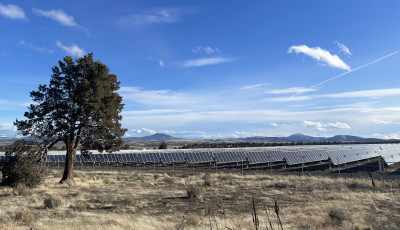
Looking east to Oregon’s solar energy future
Through rulemaking and legislation, we’re here to make it easier to achieve statewide goals by guiding development to sunny locations that make sense with existing transmission capacity and don’t disrupt our stewards’ hard work on productive farmland or pose new hazards in critical wildlife areas, migration corridors, and other important sites for sensitive species. Central and eastern Oregon in particular are primed to host such large-scale solar facilities, which can be anywhere from a few hundred to 10,000 acres or more.
Solar facilities of that size can disrupt or displace agricultural operations that feed our communities and provide jobs, and installations can permanently impact soil quality. So we’re helping Oregon focus on installing solar arrays away from high-value soils and in areas that do not adversely impact surrounding farming, ranching, and forest operations. This reduces the chance of conflicts with agricultural operations and protects irreplaceable lands—while enthusiastically encouraging solar adoption in Oregon.
“What we need to do is look for locations for solar energy that don’t have negative long-term effects."
–Troy Jones, farmer
In 2023, Oregon passed legislation that directed the Land Conservation and Development Commission (LCDC) to set guidelines for Oregon’s counties and establish criteria for identifying sites in Eastern Oregon that don’t conflict with other uses. Getting this right is crucial because experts warn energy use will surge in coming years, in part due to energy-heavy emerging technologies, like AI and data centers.
We’ve been part of this effort from the start, participating in the Eastern Oregon Solar Siting Rulemaking Advisory Committee, which led to LCDC adopting new rules in 2025.
Current conflicts between solar and agricultural uses
Solar energy, agricultural lands, and natural spaces are all important for the future of Oregon—and responsible solar siting can accommodate all of these needs.
Unfortunately, in some cases, Oregon is seeing poorly sited solar projects that are creating conflict and causing harm to agricultural lands and natural areas. For instance, in Linn County, a Korean solar company has proposed to build a solar energy park over 1,600 acres of farmed wetlands, which are underwater half the year. This would require draining the wetlands and permanently impacting land that is used by thousands of birds, elk, deer, and more.
Led by Friends of Gap Road, residents are advocating for better solutions for clean energy sites, like parking lots and rooftops.

While sustainable energy sources are a pressing need in mitigating climate change, renewables don’t need to come at the expense of farmland.

1000 Friends helped shape the 2023 legislation that will affect how communities site large-scale solar facilities in the state. Now, LCDC rulemaking is on the horizon, with the goal of identifying low-conflict areas for solar facilities so we can help meet climate goals while protecting valuable lands.