
It’s a lesson Oregon’s state legislators need to learn, too.
By Mary Kyle McCurdy | 2.5-minute read
Monmouth’s elected officials are learning a painful lesson that it’s not a good idea to cut the public out of important land use decisions. Not only is it politically unpopular, but also it is unlikely to save any time or money.
City leaders from Monmouth came to their state legislators asking for a bill that would allow the city to take a specific parcel of land out of its urban growth boundary (UGB), and add another piece of land in, involving about 160 acres in total. While there is an existing process to do just that—one that cities across the state have used successfully—it requires, among other things, a public process and an evaluation of alternative options. And that’s a good thing: Taking large chunks of land in and out of a UGB impacts the entire community, today and into the future—including its roads, infrastructure, development patterns, farm lands, and natural resources.
But apparently the Monmouth city leaders determined that public involvement was messy and would take too long, so they turned to the Oregon legislature to "supersite" this land swap. And that’s what the Oregon legislature did. Rather than deal with state level issues, the legislature became more of a local planning commission. In 2025, the Oregon legislature passed HB 2647, authorizing Monmouth to do this land swap without the usual public process: Remove a 90-acre parcel from the UGB and add in a 75-acre parcel.
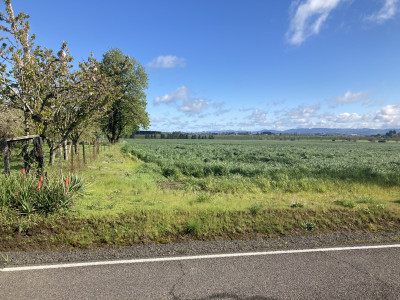
1000 Friends of Oregon opposed this bill. Regardless of the merits (or lack thereof) of this proposal on the ground, including the public in major land use decisions like this is critical. With a good public process, local leaders often learn things that help them to make better decisions, and residents have the opportunity to understand what is behind a proposal, provide their input, and, ideally, build trust with decision-makers (and vice versa). In addition, the current legal process for a land swap requires that alternative locations be evaluated, so that the best area is chosen and a land swap is not designed simply to enrich one landowner.
The Monmouth City Council recently held two public hearings to proceed with the land swap and amend its UGB. Over 100 people turned out, mostly in opposition to this supersiting proposal. Written and oral testimony described a range of issues that residents in and around Monmouth are concerned about, including questions about whether the swap even complies with the supersiting law the city wrote, farmland loss, traffic, the lack of transparency or public participation related to this decision, and more.
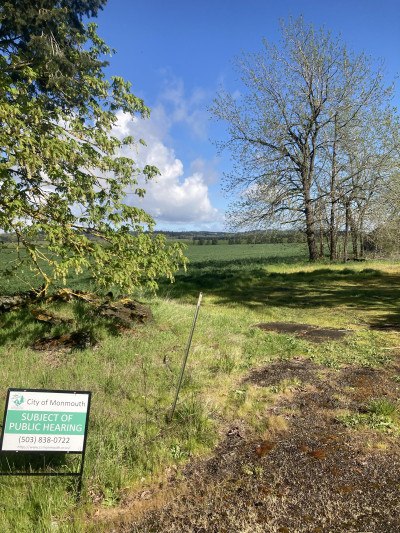
On April 7, the Monmouth City Council approved going ahead with the land swap, using the “supersiting” process rather than the usual process. However, it seems unlikely that local residents are done with pursuing their concerns.
We hope that both local leaders and legislators around the state learn a lesson: Short cuts rarely turn out to be that, especially when it comes to skirting the full public process that important land use decisions deserve.