
Defensible space and fire hardening keep homes and communities safer
By Mary Kyle McCurdy | 4.5-minute read
Check out our weekly Wildfire Wednesday newsletter (sign up here) and website updates, and check out our biweekly #WildfireWednesday content on Facebook, Instagram, and LinkedIn. We also would love to hear and amplify your stories; please email us with your ideas!
When people think about making homes wildfire resilient, they often think about building them that way from the ground up. That is an option—which currently is only 2–11% more expensive on average—but what about the rest of us who live in already-built homes? Fortunately, there are many ways to make those structures—and other buildings—wildfire resilient as well, including through state grants, incentives, and education about simple and cost-effective steps that can be taken on any home.
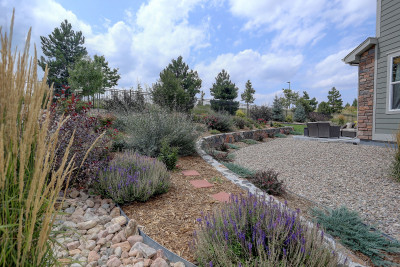
Defensible space is a key step to make buildings wildfire resilient
Maintaining a "defensible space” around both new and existing homes and structures is one key step to make buildings more wildfire resilient. This term is defined in Senate Bill 762 as “a natural or human-made area in which material capable of supporting the spread of fire has been treated, cleared, or modified to slow the rate and intensity of advancing wildfire and allow space for fire suppression operations to continue.” Defensible space of at least five feet also reduces flames cascading through vegetation to a home.
“Defensible space” definitely does not mean a moonscape around one’s home. Noncombustible materials in the first five feet can include a rock garden and other hardscaping, moving outwards towards fire-resistive vegetation and more.
The Oregon State Fire Marshal (OSFM) has just adopted a model defensible space code that a city, homeowners’ association, and more, of any size, can adopt in whole or in part or modify to meet its needs.
Programs by Oregon State Fire Marshal (OSFM)
In addition to the model defensible space code, the OSFM already has several other important programs to help Oregonians live safely with wildfire, including:
- Fire Adapted Oregon: Educates communities on how to reduce wildfire risks through preparedness and resilience efforts.
- Free Defensible Space Assessments: OSFM and partner organizations conduct, at the invitation of the property owner, defensible space assessments of homes and help owners create a plan for fire-resistant zones around their homes. OSFM has conducted over 6000 defensible space assessments, at the request of property owners, to date.
- Grant Programs: Provides communities with resources to increase wildfire resilience and the response capacity of local personnel and equipment.
- Memorandum of Understanding with Insurance Institute for Business and Home Safety (IBHS): OSFM and the IBHS signed a Memorandum of Understanding (MOU) to partner on ways to build wildfire resilience within Oregon communities, and to encourage adoption and implementation at the neighborhood scale. The objective is to encourage on-the-ground use of scientific research in the materials and designs used in our buildings and communities, to achieve the IBHS designation of “Wildfire Prepared Home” and “Wildfire Prepared Community.” This not only keeps our communities safer, but helps support stabilizing insurance availability and rates.
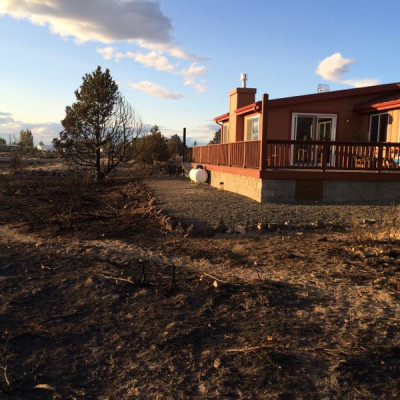
Fire-hardened homes protect both households and communities
Structures like fences and decks adjacent to homes should be built of wildfire-resilient building materials. Homes will be much less likely to catch fire from embers (which can travel up to two miles from an active fire), and will also be less likely to contribute to a fire's spread. This can protect homes and neighborhoods from wildfire, and it also helps firefighters. They would not need to spread themselves out as thinly, across multiple homes and developed areas, and instead can focus on the most at-risk people and the most dangerous hotspots.
The Oregon legislature took an important step in 2026, by passing SB 1551. This bill removes the ability of homeowner associations (HOAs) to prohibit a homeowner from installing or maintaining fire-hardened materials on and around their home and property. In addition, HOAs can no longer prohibit a homeowner from removing non-wildfire-hardened fences or other structures from their property.
Firewise USA and the Wildfire Prepared standard
Neighborhoods and communities can also take effective actions to be more wildfire prepared. Firewise USA is a voluntary program of the National Fire Protection Association (NFPA), which supports communities to reduce wildfire risk through defensible space, education, and other mutual community-specific actions. After California, Oregon has the second largest number of Firewise communities in the country (298); this list includes places across the state, from Lostine to Jacksonville.
Oregon also has the unique opportunity to be a proving ground for the IBHS Wildfire Prepared standard, and whether taking these steps to reduce wildfire risk can make a meaningful difference in insurance coverage and rates for Oregonians.
As the IBHS describes, the Wildfire Prepared standard “allow(s) homeowners to earn a designation by completing a set of science-based actions addressing three vulnerable areas of a home—the roof, specific building features and defensible space—to meaningfully reduce their home’s wildfire risk.”
This designation is currently available only in California and Oregon. The IBHS just released its updated Wildfire Prepared Home Standard, which includes the How to Prepare My Home Checklist. This guides homeowners in the mitigation steps required to achieve the designation. Homeowners must then maintain that designation for three years, by submitting an annual review that verifies ongoing landscaping maintenance.
You and your neighbors can take actions to make your home and community more wildfire prepared, and there are many resources to help you. A great one-stop-for all resources is our website, Wildfire-Ready Oregon.
Next Wildfire Wednesday: Community actions and policy changes to help Oregonians live with wildfire, part 2.
See all Wildfire Wednesday content here