
We will continue to fight for water affordability, impacted communities, and farmland
By Sam Diaz and Jenni Denekas | 4-minute read
Over the concerns raised by hundreds of Portlanders and Together for an Affordable Portland (TAP), the Portland City Council recently voted 9–3 to approve Portland Water Bureau’s request to raise water bills 9.8% each year for at least the next 10 years.
Check out our TAP testimony here
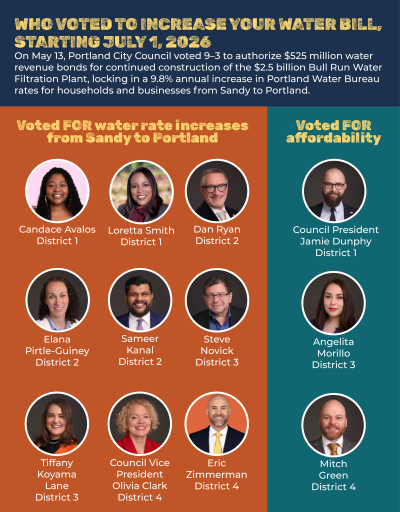
Nine Portland City Councilors approved the Portland Water Bureau’s request to issue $525 million in water revenue bonds to continue the construction of the Bull Run Filtration Plant project. PWB has only identified one source of funding for the multi-billion dollar filtration plant project: Ratepayer increases.
This means that Portland City Council has locked in all PWB ratepayers for a 9.8% annual water rate increase, doubling water rates within the next decade. (Note that the linked article was written before the bonds were passed, meaning that what was a cost projection is now about to take effect.) Water rates are set to increase by approximately 9.8% starting July 1, 2026—and this will happen each year for the next several years.
Is this massive increase in cost for ratepayers at least worth it? Sadly, no:
- This project damages world-class farmland, poses new dangers for a small rural fire district, and creates challenges for surrounding school districts and small, unincorporated communities in east Multnomah County and north Clackamas County.
- Due to the location being sited outside of Portland, this project requires dynamiting basalt near local wells and aquifers to install 7 miles of new pipeline. Local farmers have already reported issues with their wells and other negative impacts.
- This sets a worrisome precedent for the rest of the state, since a large metro area overrode the wishes of small neighboring towns.
- Making a basic necessity—water—so expensive will push residents and local businesses out of the Portland water service area.
- And the cherry on top: Portland City Council and staff did not complete a thorough review of viable alternatives to deliver clean, safe drinking water for ratepayers.
But is it too late to stop this project? Also no:
- Construction is only 30% complete.
- Building an alternative facility would likely be cheaper than finishing this one.
There is still time to change course—and we have ideas about how to do so. Together for an Affordable Portland (TAP) is calling for affordability, accountability, and alternatives that work for water treatment. Join us in advocating for a fair solution.
Here are five actions we can take together in June:
Thank the three Portland City Council members who voted NO on these water bonds: Council President Jamie Dunphy (District 1), Councilor Angelita Morillo (District 3), and Councilor Mitch Green (District 4).
Share your opinions with the Portland City Council members who voted YES for increased water rates from Sandy to Portland, and farmland destruction in east Multnomah County and north Clackamas County: Councilor Candace Avalos (District 1), Councilor Loretta Smith (District 1), Councilor Dan Ryan (District 2), Councilor Elana Pirtle-Guiney (District 2), Councilor Sameer Kanal (District 2), Councilor Steve Novick (District 3), Councilor Tiffany Koyama Lane (District 3), Councilor Eric Zimmerman (District 4), and Portland City Council Vice President Olivia Clark (District 4).
Click to find contact information for your Portland City Councilors
Join over 570 supporters of affordability, accountability, and alternatives that work by signing the TAP petition.
Join our coalition of over 10 organizations calling for affordability, accountability, and alternatives that work by filling out our organizational sign-on form.
Join our weekly Wednesday water workgroup on Zoom. We welcome any and everyone who is interested in advancing affordability, accountability, and alternatives that work for water treatment.
Community drives this work
We want to thank the hundreds of Oregonians who have taken the time to learn about this issue and sign onto the petition, testify to the city council, write to Mayor Wilson and their city councilors directly, meet with reporters, and more.
We also want to highlight the following partners that are fighting for water affordability, accountability, and alternatives that work:
- Alameda Neighborhood Association
- Coalition of Communities of Color
- Cottrell CPO (they started this effort a decade ago, and are still fighting)
- Hygiene4All
- Multnomah County Farm Bureau
- NextUp
- Oregon Association of Nurseries
- Rose Community Development Corporation
- Verde
- Welcome Home Coalition