Diving into landscape-wide and statewide approaches to reducing wildfire risk
By Mary Kyle McCurdy | 5-minute read
Check out our weekly Wildfire Wednesday newsletter (sign up here) and website updates, and check out our biweekly #WildfireWednesday content on Facebook, Instagram, and LinkedIn. We also would love to hear and amplify your stories; please email us with your ideas!
Last week, we looked at actions that individuals, families, and communities can take to protect homes and neighborhoods from the spread of embers and other wildfire-related dangers (check out part 1 here). We also discussed the possibilities presented by voluntary programs like Firewise USA and the Insurance Institute for Business and Home Safety (IBHS) Wildfire Prepared standard.
Now, we are zooming out to look at broader ways in which we can reduce wildfire risk to communities—which involves statewide policies and programs (thankfully, there are quite a few). But before we get into the solutions, we should get clear on some of the specific problems we are trying to solve.
Some of the human factors creating increased wildfire risk
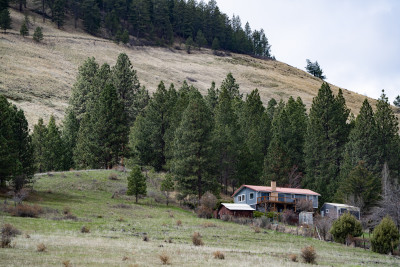
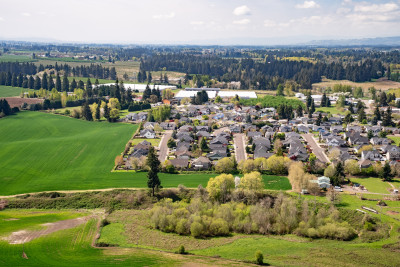
Oregon's now-repealed hazard map provides a message of caution, regarding both cities and towns that are attempting to expand into the wildland-urban interface (WUI), and scattered exurban housing development in the WUI. Sprawling development increases the risk of wildfire dramatically, and we should curtail allowing vacation homes and sprawling subdivisions across landscapes likely to burn.
Humans cause most wildfires (unintentionally) through operating motor vehicles and equipment, trash burning, barbecues and firepits that are not extinguished thoroughly, firecrackers, and more. Bringing development into the WUI means being closer to flying wildfire embers coming from wildlands. More people and structures in the WUI increases the chance of wildfire starts, and puts firefighters and communities in harm’s way. Yet we still see some cities in Oregon’s most wildfire-prone areas continually expanding or attempting to expand their urban footprint into the WUI.
Thankfully, the Oregon State Fire Marshal (OSFM), the Oregon Building Codes Division (BCDS), the Office of the Insurance Commissioner, and other state agencies are doing great work to provide guidance and tools to live more safely—in our communities—with wildfire. Plus, the Oregon State Legislature has established permanent funding to implement and sustain some of these programs.
But first, let’s begin with a key foundation: Our statewide land use program, originally established by Senate Bill 100 in 1973, and sustained through ongoing advocacy by 1000 Friends of Oregon and partners.
Land use tools to address wildfire
1000 Friends of Oregon advocates for the use and strengthening of land use tools that keep Oregonians and our communities, watersheds, and natural resources healthy. These include:
- Compact urban growth boundaries (UGBs): Not sprawling into the wildland-urban interface (WUI) saves lives, homes, businesses, money, and firefighters. It is long past time that state and local decision-makers stopped responding just to the private sprawl industry that always wants more land to build on, and instead look at what makes economic, health, and environmental sense for Oregonians. And that is building better inside our existing urban growth boundaries.
- Require following the wildfire-resilient building code and defensible space standards when building new or retrofitting existing homes and other structures where many people congregate, are employed, or are vulnerable, such as hospitals, schools, and large employment centers, and any publicly-funded housing, at least in the wildfire-prone areas of the state. Local cities and counties can do this today; we hope the state will re-visit this. The state should provide financial incentives and grants for this.
- When a wildfire does destroy communities and homes, incentivize rebuilding in safer areas and with wildfire-resilient building materials.
- Best practices for developments: New housing should also be built with smart development practices, such as ensuring more than one road in and out of neighborhoods, prioritizing street connectivity, using wildfire resilient vegetation, visibly placing fire hydrants, and more.
- Regionwide evacuation and emergency response transportation plans: Local, regional, and state governments and emergency management, transportation, and fire agencies should work together to identify and solve barriers in the existing transportation network for both safe evacuation and for firefighting response personnel and equipment. This includes ensuring all communications are provided in multiple languages.
- Limiting homes in farm and forest areas to those needed by farmers and foresters—not vacation homes.
Oregon Building Codes Division
The Oregon Building Codes Division (BCDS) updated its Residential Specialty Code on wildfire hazard mitigation (known as R327) in 2025. This code lays out the materials and methods that should be used in building or remodeling a home to protect it from wildfire, including reducing risk from airborne embers. It is available for local governments, homeowner associations, and others to adopt. Sisters and Deschutes County have already done so.
Oregon Conservation Corps
The Oregon Conservation Corps (OCC) is a youth workforce training program that focuses on wildfire risk reduction, especially by creating defensible space around communities. It provides certifications and is a career pathway for future wildland fire specialists and related fields. Over 1000 youth have participated thus far, and the OCC has treated almost 10,000 acres around communities across the state. With the passage in 2026 of HB 4134, Oregon increased its transient lodging tax by 1.25% to fund wildlife and habitat protection efforts. A portion of that fund goes to the OCC to provide durable funding for its wildfire risk reduction work.
Department of Land Conservation and Development
In 2022, the Department of Land Conservation and Development (DLCD) produced the Wildfire Adapted Communities Recommendations Report, which contains six recommended changes to state and local land use planning programs to minimize wildfire risk. These sensible recommendations are informing several cities’ approaches to wildfire (these actions are voluntary, rather than mandated by the state). DLCD plans to develop a wildfire-adapted communities guide to support other local governments that would like to voluntarily implement land use and transportation strategies to reduce fire risk.
These programs, as well as those of other state agencies and the Oregon State University Extension Service Fire Program, provide the potential for Oregon to be better prepared for future wildfires. In 2025, the Oregon legislature established, for the first time, a permanent funding mechanism dedicated to the Landscape Resiliency Fund and Community Risk Reduction. Achieving wildfire resilience is not just a matter of individual property owners taking action; effective approaches require community-wide participation and implementation.
Next Wildfire Wednesday: Unique solutions from communities around Oregon.
See all Wildfire Wednesday content here