
The good news: The solution is in our own hands
By Mary Kyle McCurdy | 4.5-minute read
Check out our weekly Wildfire Wednesday newsletter (sign up here) and website updates, and check out our biweekly #WildfireWednesday content on Facebook, Instagram, and LinkedIn. We also would love to hear and amplify your stories; please email us with your ideas!
It’s early in wildfire season, but already Oregon has had over 414 wildfires, burning over 8,000 acres—and Governor Kotek declared a statewide wildfire emergency last week, effective until the threat is significantly reduced.
What do you think is the major cause of wildfires today in Oregon? Lightning? Untended campfires? Vehicles? Backyard burning? Fire crackers? Driving over dry vegetation? Arson? Machine use?
While all these activities do cause wildfires, the major cause is outdoor, or backyard, burning. This refers to burning in a small pile or in a burn barrel on one’s property. On average, the Oregon Department of Forestry (ODF) alone responds to about 225 fires each year caused by escaped outdoor debris burns by property owners.
As Pogo, a cartoon character by Walt Kelly, famously observed, “We have met the enemy and he is us.”
People are the leading cause of wildfires—in Oregon and across the nation—and the vast majority of wildfires are unintentional. As you might imagine, the probability of a wildfire occurring increases as more people live, visit, recreate, and work in these areas.
As we discussed in our first-ever Wildfire Wednesday post, A brief history of wildfire in Oregon, wildfire is a natural and necessary part of healthy ecosystems in much of Oregon and the Western United States. However, over 100 years of fire suppression, including suppression of Indigenous use of fire, plus climate change and sprawling development into the wildland urban interface (WUI) has increased the frequency and intensity of wildfires and expanded the areas where wildfires occur.
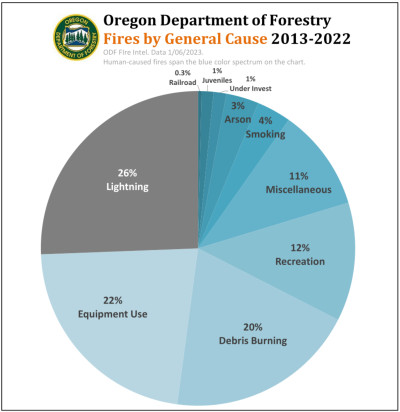
Historically in Oregon, 65–75% of wildfires have been human-caused, almost all unintentionally. Here is a graph showing the cause of wildfires from 2013–2022 on lands protected by ODF. Of course, wildfires burn in rangeland as well, as we saw in 2024 when the state set a record of almost 2 million acres burned, with most of that in eastern Oregon.
In our previous Wildfire Wednesday articles, we described how to make our homes more wildfire safe, our communities more wildfire prepared, and our transportation systems more wildfire ready. Today, we look into ways to reduce the likelihood of wildfires starting in the first place.
The good news is that because humans cause most wildfires, the solutions also begin with us. Here are some easy actions we can all take to reduce the chance of a wildfire starting in the first place:
- Before undertaking any type of burning in your backyard—no matter the size of that “yard”—consult the ODF website Before You Burn, which provides simple, clear guidance on the regulations in effect in your location. Due to the governor's declaration, the entire state is under some level of backyard burning restrictions, but there are different regulations for different areas.
- Refrain from using any type of personal fireworks; instead, attend a public fireworks display.
- The Federal Bureau of Land Management has issued restrictions and prohibitions for certain activities on land it manages in Oregon and Washington, including prohibitions on fireworks.
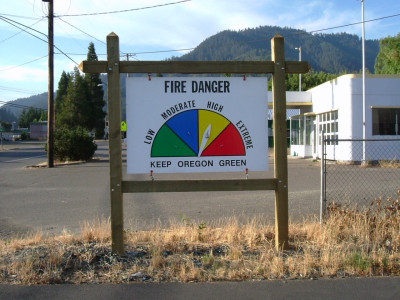
- The various National Forests in Oregon each regularly update their wildfire risk status and any consequent restrictions. Consult these before hiking, hunting, camping, or enjoying any other type of recreation. For example, on June 17 the Willamette National Forest announced it was moving to moderate wildfire danger.
- Ensure your campfire is completely extinguished before leaving your campsite by making sure it is cool to the touch.
- Ensure vehicles, trailers, and tires are properly maintained: Make sure chains and other metal parts are not dragging, check tire pressure, and look for indicators of tire wear and tear.
- Follow ODF’s regulations and stay within the approved locations for target shooting in state forests.
- Avoid driving or parking on dry grass.
- Bring extra water, a shovel, and/or a fire extinguisher with you.
We should also refrain from sprawling more development into the wildland-urban interface (WUI) as much as possible. If there are no alternatives, wildfire resilient building standards and defensible space around a structure should be required.
As we discuss in this Wildfire Wednesday piece, Oregon’s compact urban growth boundaries (UGBs) have meant that we have not developed into the WUI at the rate our western neighbors have. While we have lost lives, homes, and businesses from wildfire, it has not been at the level experienced by many of our neighbors. However, we are at risk of losing the safety provided by UGBs because some developers, politicians, and even cities are pushing to allow more housing scattered across our forest, farm, and ranch lands and to expand UGBs into the WUI. This makes no sense for the safety of Oregonians, the health of our lands and water, or for our pocketbooks.
It’s important to remember that the actions we take have impacts far beyond ourselves. When wildfires occur, they don’t just impact the communities directly in their paths; they also spread smoke far beyond the fire’s boundaries, damage watersheds that provide drinking water for towns and cities, harm fish and wildlife habitat, impact insurance rates, adversely impact many industries including tourism, and cost every Oregonian as we help pay for recovery and rebuilding. And of course, this is all in addition to the human and financial costs of fighting the fires in the first place.
The increasing cost of wildfires is reflected in bills we all pay—insurance, electric, health care costs, taxes, and more. Oregon's costs for wildfire fighting alone have grown dramatically over the last two decades. The year 2024 was the state’s most expensive fire season to date; fire fighting expenditures were $350 million while almost 2 million acres burned.
Let’s build smart from the start—both in how we build and where we build.
Next Wildfire Wednesday: What the rest of the 2026 wildfire season looks like.
See all Wildfire Wednesday content here