
Building wildfire smart from the start and providing affordable insurance are key to helping Oregon’s economy to flourish
By Mary Kyle McCurdy | 6-minute read
Check out our weekly Wildfire Wednesday newsletter (sign up here) and website updates, and check out our biweekly #WildfireWednesday content on Facebook, Instagram, and LinkedIn. We also would love to hear and amplify your stories; please email us with your ideas!
Wildfire policy is economic policy. For Oregon’s economy to flourish, we must address climate change and its impacts—and that includes wildfire. While wildfire is a necessary part the Western United States’ ecosystems, human-caused climate change is accelerating the frequency, geographic coverage, and intensity of wildfires. This is posing a threat to the current and future prosperity of Oregon and Oregonians in several ways. Today, we will dive into two key ways that wildfire is an economic threat for Oregonians.
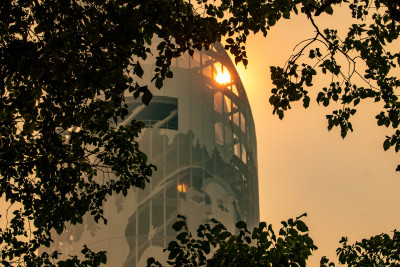
Overview: Wildfire’s economic impacts
Living with wildfire and restoring it to its more natural place in our environment means reducing community risk from wildfires; mitigating the causes of unnatural levels of wildfire; building homes and other buildings with wildfire-resilient materials; restoring landscapes and infrastructure damaged by wildfire; reinforcing communities in ways to reduce climate impact, not increase it; and becoming a home to new technologies and businesses that assess and reduce wildfire risk and develop new products
Despite state and some business leaders talking a lot lately about “economic prosperity,” few are talking about wildfire or climate change. The Governor’s Economic Prosperity Council’s recent report did not mention climate change, and wildfire was mentioned once in relation to insurance liability. That is a missed opportunity. Oregon can be a national leader, not only in mitigation and risk reduction, but also in growing a multi-sector industry—from geospatial technologies and technical advances, to evolving science on restoring and recovering forests and ecosystems, to developing products that use wood removed through forest thinning—such as mass timber construction.
Thankfully, forward-looking civic and economic leaders are focused on this—locally, nationally, and internationally. For example, Matt Donegan, who chaired former Gov. Brown's Council on Wildfire Response in 2019, shared with Portland Business Journal his concern that wildfire and smoke threaten Oregon’s economic health, insurance, and infrastructure. In the same article, John Tapogna, the new President of the Oregon Business Council, stated that wildfire risk is “the biggest existential threat to the state's economic future.” The article also noted that wildfire and smoke risk assessment are now included in real estate listings, much like Walkability Scores.
There are many ways to measure wildfire impacts to properties. For example, First Street Foundation, a nonprofit organization whose mission is “connecting climate and financial risk,” uses advanced science to quantify climate risk for properties around the world, including wildfire and flood risk for every property in Oregon. Businesses from small to multi-national are recognizing the risk posed by the increase in “natural” disasters exacerbated by climate change—flood, hurricane, wind, and wildfire—and are using First Street’s risk analysis methodology to determine how and where they do business. Additionally, the Federal Reserve of San Francisco, which covers the Western United States, including Oregon, has published numerous papers on the financial risks posed by climate change and wildfire.
Today we will look at two aspects of how wildfire impacts Oregon's economy: The costs to all Oregonians of continuing to “fight” wildfires while under-investing in mitigation and adaptation, and the impact on insurance affordability and availability. In a future article, we will address the health and economic impacts of wildfire, and especially smoke, on vulnerable communities and workers.
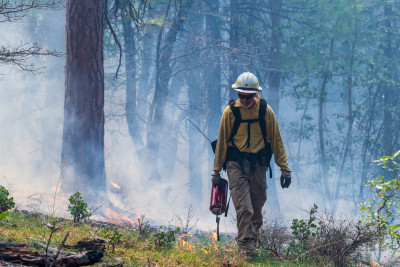
Pay less now—or pay more later
The cost to Oregon of suppressing fires has risen dramatically in recent years. In twenty years, the average cost to the Oregon Department of Forestry—just to fight large fires—went from about $11 million per year to $79 million. The costs of other fire fighters and the support crews must be included as well—such as the Oregon State Fire Marshal, local fire districts, and those who live on and steward the land - farmers and foresters. The year 2024 was the state’s most expensive fire season to date; fire fighting expenditures were at least $350 million while almost 2 million acres burned.
And that’s just the cost of fighting wildfires. The cost of recovery and rebuilding communities and landscapes adds hundreds of millions of dollars annually. The cost of rebuilding from the 2020 Labor Day Fires alone is estimated to top half a billion dollars in public funds, in addition to insurance payments and payouts in the billions of dollars from lawsuits against utilities.
Who pays for this? All Oregonians. Whether or not we directly experience wildfire or its smoke, the increasing cost of wildfires is reflected in our bills for insurance, electric, health care costs, taxes, and more.
About 10% of Oregonians live in census tracts with a high or very high wildfire hazard, as described in our guest article by Sightline Institute. Over half of those living in high-hazard census tracts also live in areas that rate high on social vulnerability—places with relatively low incomes, high housing instability, and other socioeconomic disadvantages. People in these communities are more likely to face harm, displacement, or catastrophic economic loss when wildfires strike. Because about half of Oregon's recently burned areas are in six counties, focusing community risk reduction and mitigation in these places can have a meaningful impact on reducing wildfire risk. Many of these are resource-based communities that have existed since long before climate change brought vegetation changes and wildfire closer to them.
However, over 20,000 people have moved into Oregon's higher risk wildfire areas since 2018, including on the outskirts of fast-growing wildfire-prone places like Bend and Medford. These people tend to be higher income, less socially vulnerable populations. In Oregon, over 80% of vacation homes built in recent years have been in or near the wildland-urban interface (WUI). Oregonians cannot afford to, and should not, continue paying for fighting wildfires over ever-larger landscapes where unwise development patterns mean even more people are at risk, causing all of us to pick up the bill. It’s not fair to ask all Oregonians to pick up the tab for a few.
The long-term solution is to reduce the risk in the first place, through up-front investments and policy changes. To truly have a prosperous economy in which all Oregonians benefit, we must:
- Invest in a year-round work force, not just to fight fires, but also to replant and recover burned landscapes, restore watersheds, remove invasive species, create defensible space around communities and key building and infrastructure, and treat forests.
- Invest in community risk reduction programs, including defensible space and home hardening.
- Require all new buildings, at least in wildfire prone areas, to be built to wildfire resilient standards.
- Not allow sprawling development out into and scattered across the wildland urban interface.
- Invest in research, technologies, and businesses that assess and reduce wildfire risk.
By investing upfront, the scale, frequency, and perhaps even the number of wildfires could decrease and Oregon could lead the nation in a climate-resilient economy. That’s another way we can create a resilient and diverse economy of the future, as discussed in this December 2025 op-ed by Executive Director Sam Diaz.
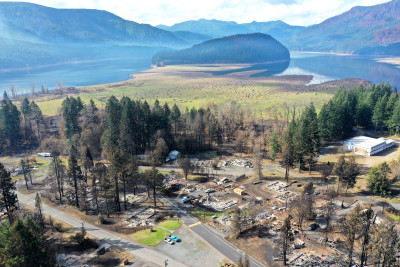
Insurance and wildfire
The affordability and availability of property insurance in Oregon, and across the United States, is at risk from wildfire. First Street’s modeling shows that large numbers of properties across the country are at risk of rising insurance rates and non-renewals due to the growing risk of wildfires, and that we are already seeing premiums reflecting climate risk.
But the impact of not being able to obtain or afford property insurance goes beyond the single property owner to the whole economy. Obtaining a mortgage loan to buy a home or a building requires obtaining and maintaining property insurance. When insurance premiums go up, or insurance is unavailable altogether, property values go down. While lowering property values might have an upside for would-be purchasers, the inability to afford or obtain insurance will erase that possible attraction by making it difficult to obtain a mortgage.
Oregon has a shortage of housing, especially for those of moderate and lower incomes. If insurance becomes unavailable or unaffordable, meeting our housing needs will become unachievable, which will significantly and adversely impact Oregon's ability to attract and keep businesses and workers.
Oregon is in the advantageous position of having leadership at the State Fire Marshal, Insurance Commissioner, and Department of Forestry that are working diligently with insurers and research institutions to reduce wildfire risk and thereby favorably impact our insurance markets.
As we described in our July 21 piece, Integrating wildfire-resilient communities and insurance, the Wildfire Prepared standards of the Insurance Institute for Business and Home Safety provides the industry framework for keeping Oregon’s homes and communities safer and for keeping insurance accessible.
Bottom line: It can feel overwhelming to think about the impacts that wildfire has on communities and the state and local economies. But the good news is that we have the information, structures, and Oregon know-how to create a more resilient and prosperous future for all Oregonians—especially if we work together.
Next Wildfire Wednesday: Wildfire smoke and vulnerable communities.
See all Wildfire Wednesday content here