
Meeting wildfire-resilient building codes makes new construction and retrofits both cost-effective and safer
By Mary Kyle McCurdy | 7.5-minute read
Check out our weekly Wildfire Wednesday newsletter (sign up here) and website updates, and check out our biweekly #WildfireWednesday content on Facebook, Instagram, and LinkedIn. We also would love to hear and amplify your stories; please email us with your ideas!
How we build homes and other structures is critically important for whether they survive a wildfire. This can also make a meaningful difference in whether firefighters can save a neighborhood or community. Plus, building homes “wildfire smart from the start” is financially smart—for both the homeowner and the public.
As we described in our May 5 edition of Wildfire Wednesday, fires burning in the wildland-urban interface (WUI), forested areas, or other natural areas often bring fire into communities by shooting embers that can travel as far as two miles. This is especially true if winds are high, as Oregon experienced during the 2020 Labor Day fires. These embers can enter unprotected structures, quickly burn them, and move on to other homes, businesses, and neighborhoods. But there are actions we can all take to reduce this risk—including actions that can be taken by state and local governments.
Our Wildfire Wednesday feature from June 2 focused on ensuring that local, regional, and state governments and private landowners cooperate to create a transportation plan for communities in wildfire-prone regions, to ensure there are adequate routes for safe evacuation and emergency response, and that they are clearly communicated in multiple ways and in multiple languages.
Last week’s Wildfire Wednesday feature focused on wildfire-related transportation planning the subdivision and neighborhood level. We can build new residential developments and retrofit existing ones to provide more than one way to evacuate a neighborhood and for emergency vehicles to gain safe access. Wildfire-informed planning also ensures sufficient and accessible fire hydrants, creates fire breaks, and more.
Today, we are zooming in even more, with a focus on individual structures—especially homes and places where vulnerable people congregate, such as schools, hospitals, and nursing homes.
The nuts and bolts of home hardening
The Oregon Building Codes Department (BCD) has adopted a wildfire resilient building code that covers the construction of new one- and two-family dwellings and significant accessory structures. The Oregon Residential Specialty Code (ORSC) Section R327, Wildfire Hazard Mitigation Standards, is often referred to simply as the “R327 code” or “home hardening.” Use of this wildfire-resilient building code is voluntary.
Home hardening describes construction-related materials and methods to make a home more resistant to wildfire damage. Some of these are:
- Using certified materials for siding and roofing that resist ignition during a wildfire,
- Installing attic ventilation devices to reduce ember intrusion,
- Keeping eaves closed,
- Installing fire resistant windows to protect openings, and
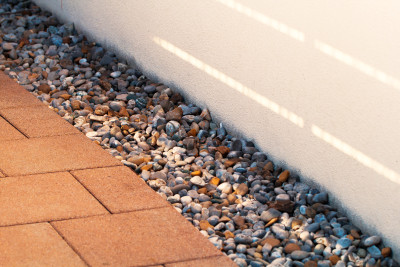
- Not allowing flammable fences, other structures, or materials like dry vegetation within five feet of the home.
While Oregon's wildfire resilient building code is voluntary, local governments can, and have, adopted it. Ashland, Medford, Sisters, Grants Pass, and Deschutes County have all adopted the R327 standards for new homes and accessory structures.
Why should we both require and encourage building and remodeling to the wildfire resilient code?
- If the home is new, the cost is about the same as using conventional materials.
- Whether building new or remodeling, it is far cheaper to build smart from the start—for the homeowner and the public—than fight a wildfire and to rebuild after a fire.
- It is safer for firefighters, and it enables them to focus on the wildfire itself rather than on structures, if fewer homes are going up in flames.
- It can help slow the spread of a wildfire. Flying embers that land on non-combustible material can die, rather than setting a home on fire that then spreads to the rest of a neighborhood.
- Construction practices are trending in this direction anyway, especially for roofing materials; most home roofing materials meet the Class-A fire-rated standard.
- Insurance companies will likely require it; some are already doing so.
Next, we will take a deeper dive into a few of the reasons why building and remodeling to a wildfire resilient code is important.
Building wildfire-resistant homes is affordable
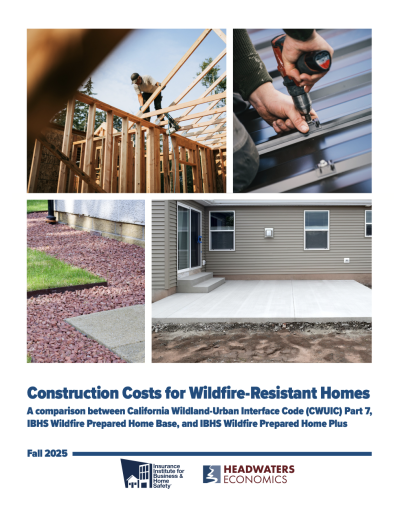
A recent analysis from Headwaters Economics and the Insurance Institute for Business and Home Safety (IBHS) demonstrates that building wildfire resistant homes is affordable. The report Construction costs for wildfire resistant homes concludes that building new homes to high wildfire resistant standards costs only 2–3% more than conventional construction.
The report also provides detailed cost comparisons between wildfire-resistant and traditional building materials, including pricing for key components such as roofing, eaves, siding, windows, doors, decks, and landscaping within the five-foot “noncombustible” perimeter of a home.
As Headwaters concluded,: “The findings demonstrate that home hardening should become a core component of every community’s wildfire risk reduction strategy.”
Several states require new construction in designated high wildfire hazard areas to be built to wildfire resilient building codes.
However, as we described in our May 5 Wildfire Wednesday feature, Oregon repealed its wildfire map, which would have required property owners to follow the wildfire resilient building code for new homes. Oregon did this just as other states were actually adopting the same type of map, accompanied by regulations to increase wildfire safety.
Oregon should rethink that decision. Building smart from the start is far less expensive and less stressful than rebuilding after a fire!
Reducing wildfire loss in the first place is the most cost-effective choice
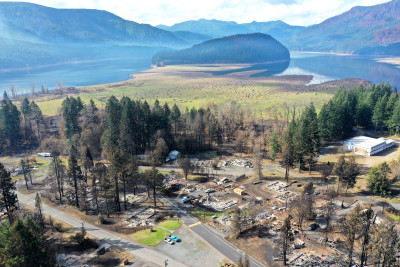
Oregon’s wildfires have had widespread impacts, including loss of lives, homes, and businesses; displacement of children from schools; damage to infrastructure; and impacts on entire industries, such as tourism. Communities like the Rogue Valley and Detroit are still feeling the impacts on local tourism from the 2020 Labor Day fires. Some people who lost their homes in those fires—many part of the core work local force—have not returned. Others are still waiting for payments from various sources to rebuild their homes.
Rebuilding homes, communities, and infrastructure after wildfires is very expensive (on top of the extreme hardships of displacement that it causes), and we all end up paying for it, whether we live in a wildfire-prone area or not. The increasing cost of wildfires is reflected in bills we all pay: Insurance, utilities, health care costs, taxes. The cost of rebuilding from the 2020 Labor Day fires alone is estimated to top half a billion dollars in public funds, in addition to insurance payments and payouts in the billions of dollars from lawsuits against utilities.
We want all Oregonians to be healthy, safe, and able to live affordably. That means learning from the past and building better in the future, with the following lessons:
- Do not expand communities into wildfire-prone areas.
- Require building and rebuilding to the R327 building code.
- Implement defensible space around structures and communities in wildfire-prone areas.
Headwaters Economics and the nonprofit Insurance for Good studied wildfires in California, Colorado, and Hawai’i to answer three questions: “(1) How much economic loss could be avoided by building homes to wildfire-resistant standards? (2) What level of financial investment is needed to build wildfire-resistant homes following disasters? And (3) What types of programs could help homeowners afford the necessary upgrades?”
They concluded:
“We found that rebuilding to wildfire-resistant standards is a highly cost-effective strategy that can significantly reduce future economic losses—by up to 43%—while adding relatively little to construction costs for homeowners, especially when supported by building codes and insurance coverage. These findings … demonstrat[e] that fundamentally, homeowners, insurers, businesses, and local and state budgets are better off rebuilding communities to wildfire-resistant standards.”
We applaud the cities and counties that have followed these common-sense steps to require building to the wildfire-resilient building code and implementing defensible space standards. However, a patchwork approach is not adequate to truly keep Oregon communities and people wildfire prepared and safe, and to save money for all of us. We urge the Oregon legislature to follow the common sense recommendations from this and other studies, and:
- Require new homes and significant remodels in wildfire-prone areas to follow the R327 wildfire-resilient building code.
- Provide loans and grants to homeowners displaced by wildfire, for all publicly-funded affordable housing, and for institutions where vulnerable persons congregate, for building, rebuilding, and retrofitting to meet the R327 wildfire-resilient building codes.
- Robustly fund education and assistance for establishing and maintaining defensible space around homes, businesses, and institutions such as hospitals and schools.
Insurance companies will likely require it
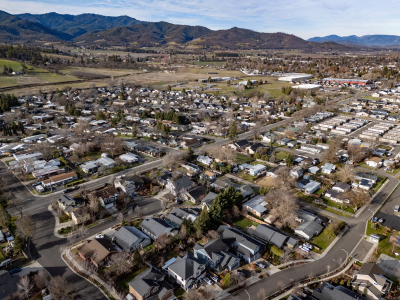
Insurance companies are increasingly requiring that homeowners build or retrofit existing homes to meet wildfire resilient building codes. The Insurance Institute for Business and Home Safety has developed a “Wildfire Prepared Home” standard, which we described in our May 12 edition of Wildfire Wednesday. Certification to this standard is available in Oregon and about a dozen other states, and is being promoted by insurance companies. We can get ahead of coming requirements and keep a competitive insurance industry in Oregon by supporting homeowners and communities in meeting the Wildfire Prepared Standards.
All in all, building to the wildfire resilient building code and establishing defensible space around individual buildings and across communities in wildfire-prone areas is the most cost-effective way for all Oregonians to live with wildfire.
Next Wildfire Wednesday: How wildfires really start—and how we can prevent them.
See all Wildfire Wednesday content here